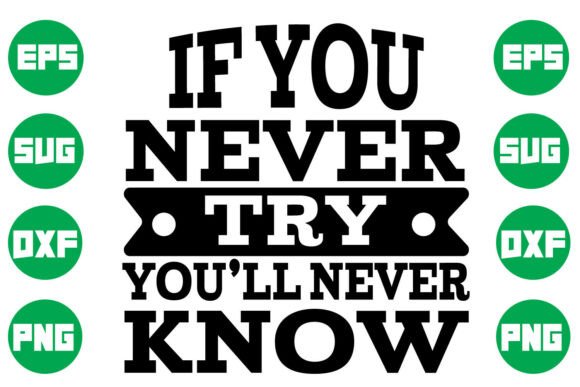
If You Never Try, You’ll Never Know
As an embroidery designer and product reviewer with years of experience in the craft business, I’ve seen my fair share of digital embroidery files. Some are perfect for a wide range of projects, while others require careful consideration before stitching. Today, I’m taking a closer look at If You Never Try You ll Never Know, a sassy western-style SVG design that promises to add flair to your T-shirt creations.
First Impressions: Style Meets Substance
The moment you open the digital printable files (which come in a zip format), it’s clear this isn’t just another run-of-the-mill T-shirt design. The fancy flourish style gives it a unique visual personality—playful yet bold. It has that classic western edge with a modern twist, making it ideal for customers who want something edgy but still wearable.
I found the layout to be well-balanced, with enough negative space to let the main text breathe. The phrase “If You Never Try, You’ll Never Know” is front and center, which makes it great for statement pieces. The forest-inspired elements around the text add depth without overwhelming the message. This kind of detail level works especially well on larger formats like sweatshirts or tote bags where the design can stretch out naturally.
Real-Life Embroidery Use Cases
Let’s imagine a scenario: You’re an Etsy seller preparing custom embroidered holiday gifts for your seasonal lineup. You need something that stands out but still feels approachable. This design could work beautifully on a custom apparel piece like a personalized sweatshirt or even a western-themed tote bag. The satin stitch outlines give it a polished finish, and the fill stitch details help maintain clarity across different fabric types.
For small shop owners or boutique branding efforts, the design offers a consistent aesthetic if used across multiple items. Think of using it on aprons for a rustic kitchen brand or as part of a nursery decor set for parents looking for a touch of sass and sentimentality. It’s also a strong candidate for embroidered patches—especially if you're aiming for a vintage or DIY vibe.
Customer Reactions and Giftability
What’s interesting about this design is how it subtly conveys confidence. Customers often gravitate toward designs that express their personality, and this one definitely does that. When applied to a handmade product, it adds a layer of charm that elevates the overall value. As a personalized gift, it speaks volumes—it's not just an item; it's a statement.
However, I’d caution against using it too casually. Because of its intricate detailing and bold typography, it might not resonate with everyone. That said, if your target audience enjoys quirky, expressive designs, this one will likely generate positive buyer engagement.
Where to Use Carefully
While the design is versatile, there are certain limitations to consider. For instance, when working with small hoop sizes, the detailed flourishes may get lost or become distorted. The same goes for textured fabrics—the fine lines and curves won't stitch as cleanly, which could affect the visual appeal.
- Thin or stretchy fabrics: The stitch density might cause puckering or distortion.
- Dark fabric backgrounds: Thread color contrast becomes critical here. Make sure your chosen colors pop!
- Curved surfaces like caps or hats: The design needs to be scaled appropriately to avoid stretching or misalignment.
- Dense stitch areas can lead to longer stitching times and more tension issues if not managed properly.
- Products needing frequent washing: Always test how the design holds up over time, especially on items like baby clothes or tea towels.
Design Notes from the Field
Here are some practical tips based on my own testing and experience:
- Test on scrap fabric first. Especially if you're planning to use it on delicate materials or curved surfaces.
- Review thread colors carefully. If the design doesn’t specify thread counts or shades, you’ll want to choose ones that stand out against your fabric.
- Inspect tiny lettering and decorative accents under magnification. These can be tricky to stitch clearly without adjustments.
- Confirm the hoop size required. If not provided, scale it down gradually to find the sweet spot between detail and usability.
- Use proper stabilizer for best results. Heavier stabilizers can help prevent shifting during complex stitch patterns.
- Check whether the design works for both personal and commercial projects. Licensing terms aren’t always obvious, so verify before selling finished items or digital products.
Visual Appeal and Branding Impact
One of the strengths of If You Never Try You ll Never Know is its ability to blend into a variety of themes. Whether you're doing sweatshirt embroidery or designing a tote bag, the design brings a sense of fun and authenticity. Its western flair fits well in bohemian, country, or artisanal branding styles.
On a white T-shirt, the design looks crisp and vibrant. On darker tones, it depends entirely on thread color choices. I recommend running a black and white mockup to see how it would translate if printed instead of stitched, especially if you're considering dual-use digital assets.
From a professionalism standpoint, the design feels like a premium asset. It’s not overly complicated, but it carries enough weight to make your finished product feel intentional and high-quality. This matters for craft businesses looking to build customer trust through thoughtful presentation.
Final Thoughts for Designers and Sellers
In summary, If You Never Try You ll Never Know is a solid choice for T-Shirt Designs and Graphics that aim to strike a balance between boldness and elegance. It suits a wide array of embroidery projects, from casual wear to curated gifts.
But remember, every design has its nuances. Take the time to understand how it behaves on your specific materials and equipment. Ask yourself: Will this design hold up after repeated washes? Does it align with my brand identity? Can I confidently offer it as part of a commercial embroidery package?
As an experienced designer, I encourage you to embrace experimentation—but do it smartly. Test, adjust, and then trust your instincts. After all, if you never try, you’ll never know what works best for your next big project.